



Understanding Algae Growth in Water Storage Tanks: Prevention and Removal
Algae growth in water storage tanks is a common issue that can lead to several costly results. When the conditions are right, algae can thrive in these tanks, leading to a variety of problems ranging from taste and odor issues to potential health risks. This section will explore what causes algae growth and why it’s important to address this issue promptly. This relates directly to Algae Growth In Water Storage Tanks: Prevention And Removal.
Algae Growth In Water Storage Tanks: Prevention And Removal – Causes of Algae Growth in Tanks
Algae require sunlight, nutrients, and moisture to grow. In water storage tanks, the primary factors contributing to algae growth are:
– Sunlight: Tanks that have exposed surfaces or are located in sunny areas can attract sunlight, providing a perfect environment for algae.
– Nutrients: Organic matter from the surrounding soil or air, such as dust particles, can enter the tank and serve as nutrients for algae.
– Moisture: Water is essential for algae growth. Tanks that retain water for extended periods are more susceptible to this issue.
Algae Growth In Water Storage Tanks: Prevention And Removal – Costly Results of Algae Growth
Algae growth in water storage tanks can lead to several expensive and inconvenient issues, including:
– Water Discoloration: Algae can cause the water to turn green or brown, making it unappealing for use.
– Taste and Odor Issues: The presence of algae can impart a foul taste and unpleasant odor to the water.
– Contamination Risks: Algae can release toxins into the water, posing health risks to individuals consuming the contaminated water.
Preventing Algae Growth in Tanks
To prevent algae growth, it’s essential to maintain the tank regularly. Here are some steps you can take:
– Use Dark-Colored Tank Liners: Dark colors absorb more sunlight, reducing the likelihood of algae growth.
– Cover Exposed Surfaces: Use shading techniques or opaque coatings on exposed surfaces to block out as much sunlight as possible.
– Regular Cleaning and Disinfection: Schedule routine cleaning and disinfection to remove existing algae colonies and prevent new ones from forming.
Removing Algae from Tanks
If you notice signs of algae growth, it’s important to address the issue promptly. Here’s how to go about removing it:
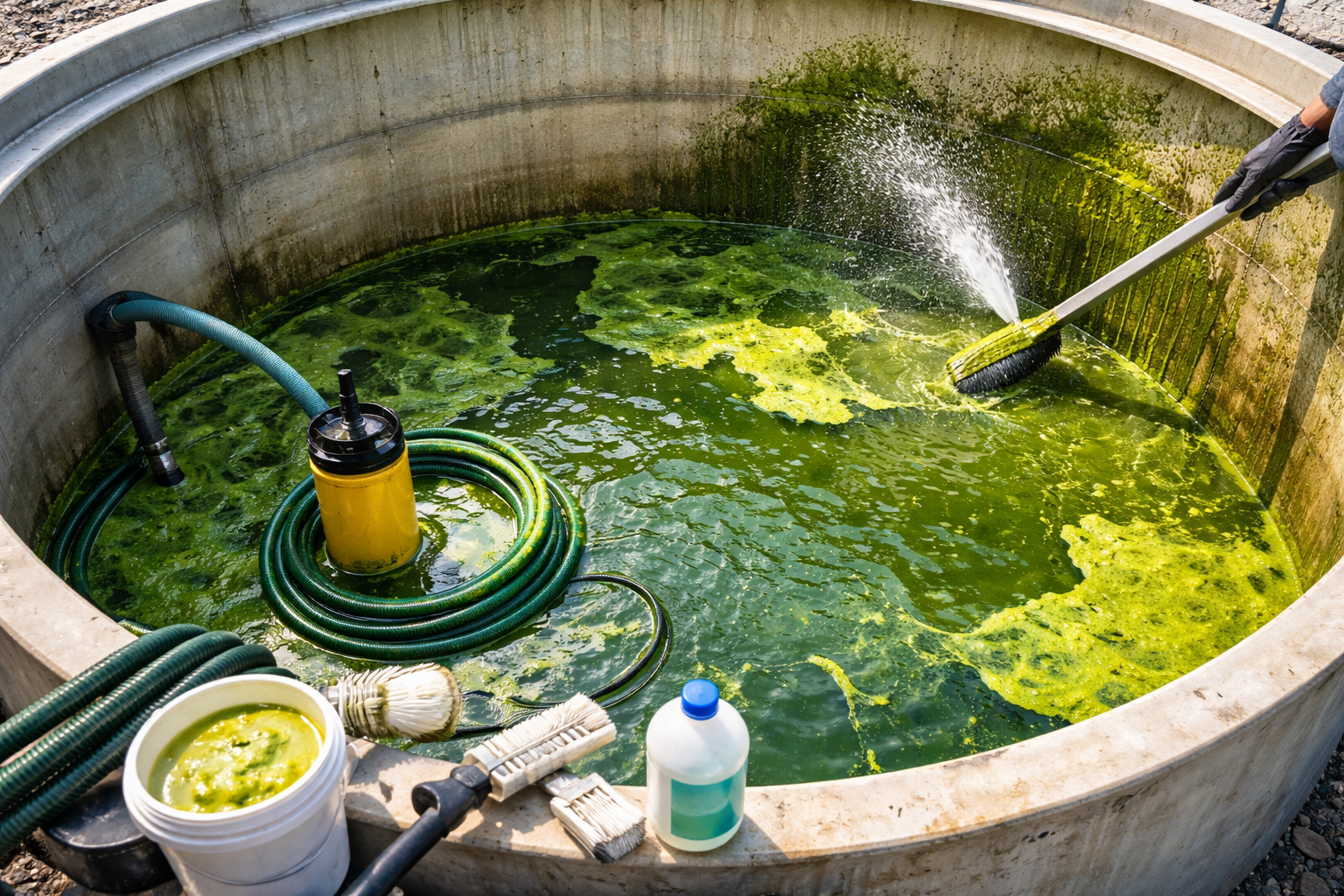
– Drain and Flush: Drain the tank completely and flush it with clean water.
– Scrub the Interior: Use a non-toxic scrubbing agent to physically remove any visible algae.
– Apply Disinfectants: Apply approved disinfectants to kill remaining algae. Ensure you follow the manufacturer’s instructions. When considering Algae Growth In Water Storage Tanks: Prevention And Removal, this becomes clear.
Maintaining Clean Water Storage
To keep your water storage tanks clean and free from algae, follow these best practices:
– Regular Inspections: Conduct regular inspections of the tank and its surroundings to spot any signs of algae growth early.
– Proper Maintenance Schedule: Develop a maintenance schedule that includes cleaning and disinfection at appropriate intervals.
– Consult Professionals: For large or complex tanks, consider hiring professionals for thorough cleaning and maintenance.
Expert Tips for Preventing Algae
Here are some practical tips to help you prevent algae growth in your water storage tank:
1. Choose the Right Location: Position the tank where it receives minimal sunlight.
2. Seal Gaps and Leaks: Ensure that the tank is well-sealed to prevent dust and other contaminants from entering.
3. Use UV Light: Installing a UV light system can inhibit algae growth by disrupting their DNA.
FAQs About Algae Growth
1. How often should I clean my water storage tank?
– Regular cleaning is recommended every 6 to 12 months, depending on usage and environmental factors.
2. Can algae growth affect the lifespan of a water storage tank?
– Yes, prolonged algae growth can weaken the structural integrity of the tank due to the release of acids.
3. Are there any natural solutions to remove algae from tanks?
– While some natural solutions like vinegar or lemon juice might work temporarily, they are not as effective as chemical disinfectants for long-term control.
Conclusion
Algae growth in water storage tanks can lead to significant issues, including contaminated water and structural damage. By understanding the causes, recognizing the signs, and implementing preventive measures, you can ensure that your tank remains clean and safe. Regular maintenance is key to avoiding these costly problems. Understanding Algae Growth In Water Storage Tanks: Prevention And Removal is key to success in this area.