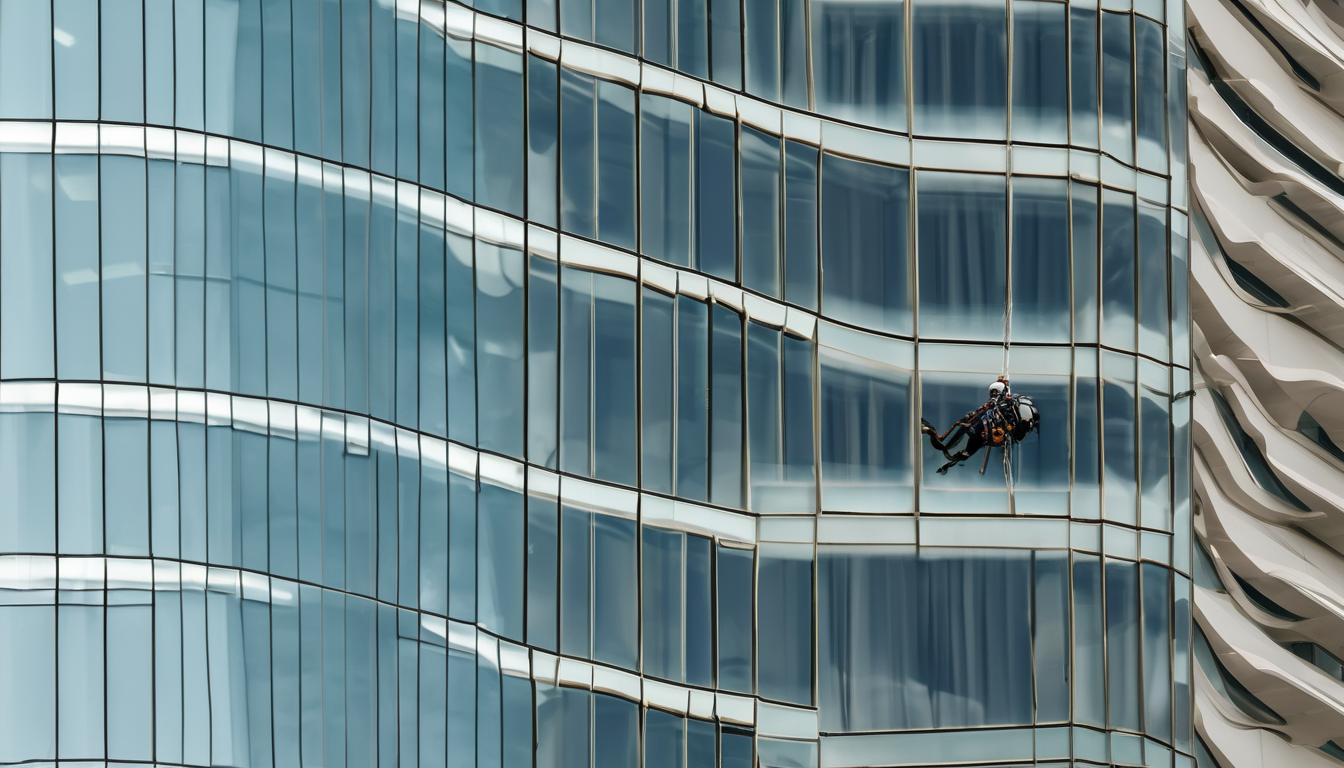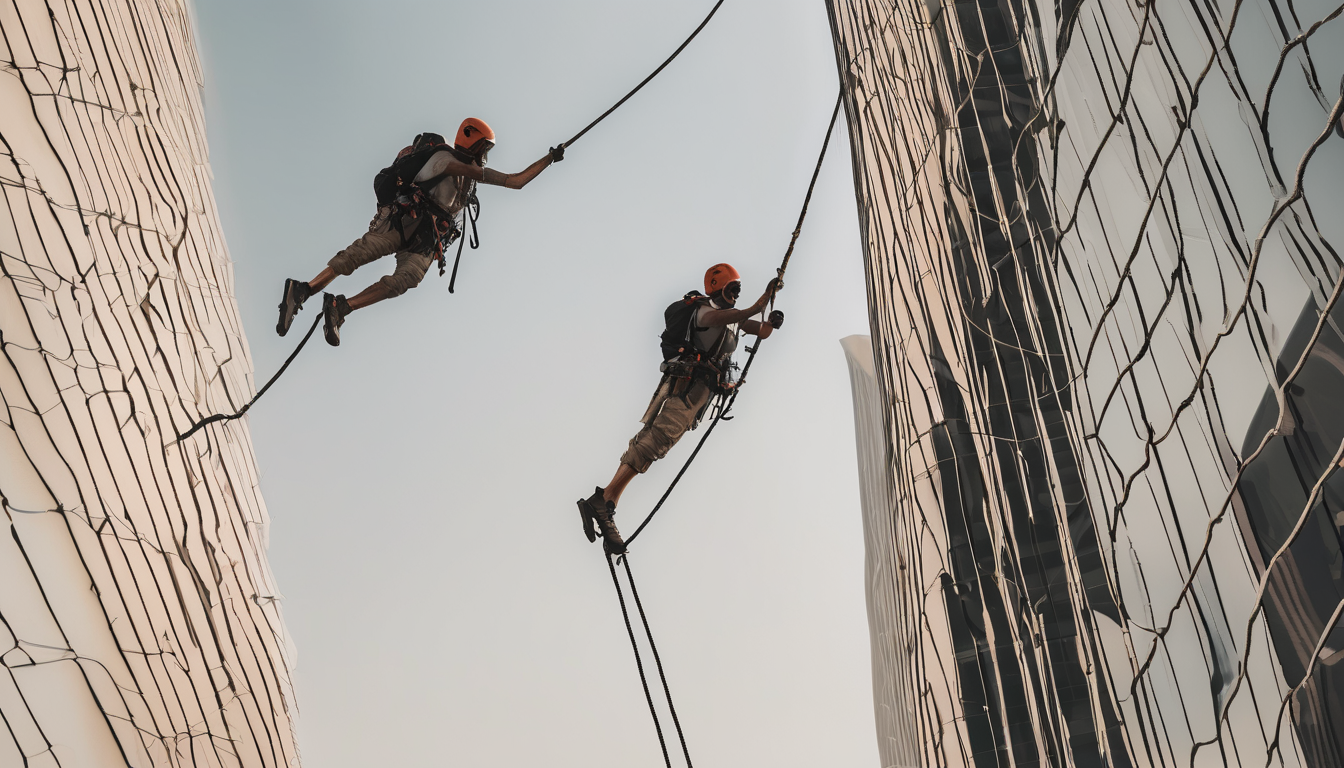

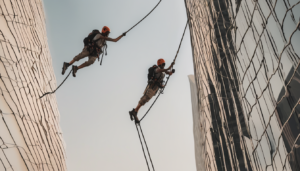
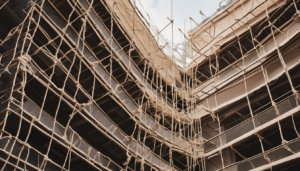
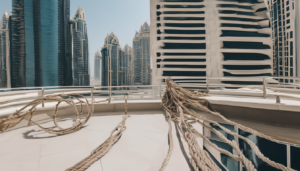

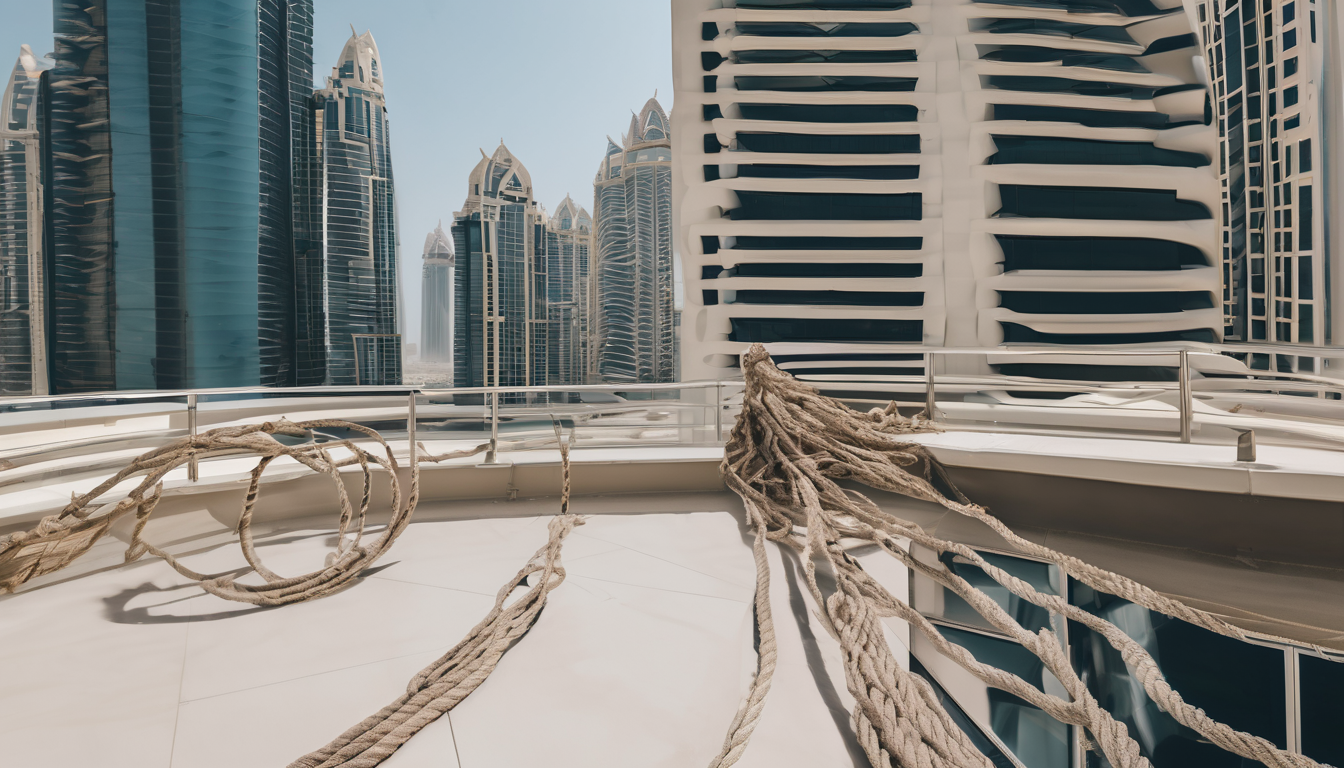

Rope access safety standards for Dubai high-rise cleaning represent a critical framework for maintaining some of the world’s tallest buildings. In Dubai’s unique urban environment, where skyscrapers dominate the skyline, specialised rope access techniques have become the preferred method for facade maintenance and cleaning. These standards combine international best practices with Dubai-specific regulations to ensure worker safety and building integrity.
The development of Rope Access Safety standards for Dubai high-rise cleaning has evolved alongside the city’s construction boom. Dubai Municipality, in collaboration with international safety organisations, has established comprehensive guidelines that address the particular challenges of working at extreme heights in desert climate conditions. These standards cover equipment certification, personnel training, emergency procedures, and environmental considerations specific to the region.
Professional rope access operations in Dubai require adherence to multiple regulatory frameworks. The International Rope Access Trade Association (IRATA) provides the foundational safety standards, while Dubai Municipality adds local requirements for building access, environmental protection, and public safety. Together, these frameworks create a robust system that protects workers, building occupants, and the public during high-rise cleaning operations.
Rope Access Safety Standards for Dubai High-Rise Cleaning – Essential Rope Access Safety Equipment Requirements
Rope access safety standards for Dubai high-rise cleaning mandate specific equipment specifications that exceed general industrial requirements. All equipment must carry appropriate certification marks, including CE certification for European standards or equivalent recognition for other international standards. The desert climate of Dubai presents unique challenges that equipment must withstand, including extreme heat, UV radiation, and abrasive sand particles.
Primary rope systems require dual independent lines—a working rope and safety rope—each capable of supporting minimum breaking strengths of 22kN. Dubai’s high temperatures necessitate special consideration for rope materials, with many operators preferring static kernmantle ropes with heat-resistant properties. Karabiners, descenders, and ascenders must demonstrate compatibility with the specific rope types used and withstand the environmental conditions prevalent in the region.
Personal Protective Equipment Standards
Personal protective equipment for rope access technicians in Dubai must address multiple environmental factors. Helmets require integrated chin straps to prevent displacement in high winds, which are common at elevation in desert environments. Full-body harnesses with industrial-grade attachment points represent the minimum standard, with many operations opting for harnesses specifically designed for prolonged suspended work.
Eye protection must guard against both UV radiation and blowing sand, while respiratory protection becomes essential when working with cleaning chemicals or in dusty conditions. The combination of high temperatures and physical exertion requires hydration systems that technicians can access while suspended, along with cooling garments that help regulate body temperature during extended operations.
Rope Access Safety Standards for Dubai High-Rise Cleaning – IRATA Certification Requirements for Dubai Operations
Rope access safety standards for Dubai high-rise cleaning universally require IRATA certification for all technicians operating at height. The IRATA certification system provides three levels of qualification, with Level 1 representing entry-level technicians, Level 2 indicating experienced practitioners, and Level 3 denoting supervisory capability. Dubai operations typically require a minimum of Level 2 certification for working technicians and Level 3 for site supervision.
IRATA certification requires annual renewal and documented logged hours, ensuring technicians maintain current skills and knowledge. The certification process includes rigorous practical assessments and theoretical examinations covering rescue procedures, equipment knowledge, and risk assessment methodologies. Dubai-based training providers must demonstrate compliance with both IRATA international standards and Dubai Municipality’s additional requirements for local conditions.
Dubai-Specific Certification Elements
Beyond IRATA certification, rope access safety standards for Dubai high-rise cleaning incorporate local knowledge requirements. Technicians must demonstrate understanding of Dubai’s emergency services coordination procedures, including specific contact protocols for high-rise incidents. Knowledge of local weather patterns, particularly the seasonal shamal winds and summer heat conditions, forms an essential component of Dubai-specific safety training.
Cultural sensitivity training also features in Dubai’s rope access requirements, particularly regarding working hours during Ramadan and appropriate conduct in a Muslim-majority country. Technicians must understand building access protocols specific to Dubai’s residential and commercial properties, which often include security considerations beyond standard workplace safety requirements.
Rope Access Safety Standards for Dubai High-Rise Cleaning – Dubai Municipality Compliance Framework
Rope access safety standards for Dubai high-rise cleaning operate within a comprehensive regulatory framework established by Dubai Municipality. The DM’s Building Department oversees facade maintenance operations, requiring specific permits for rope access work on buildings exceeding certain heights. Permit applications must demonstrate compliance with all safety standards and include detailed method statements, risk assessments, and emergency response plans.
Dubai Municipality requires documentation of equipment certifications, technician qualifications, and insurance coverage before approving rope access operations. Regular inspections during operations ensure continued compliance, with particular attention to anchor point integrity, environmental protection measures, and public safety precautions. The municipality maintains the authority to suspend operations immediately if safety standards appear compromised.
Environmental Protection Requirements
Environmental considerations form a significant component of rope access safety standards for Dubai high-rise cleaning. Cleaning chemicals must meet Dubai Municipality’s approved substances list, with particular restrictions on runoff into the municipal drainage system. Containment systems for wastewater collection and proper disposal procedures represent mandatory requirements for all cleaning operations.
Noise pollution controls limit operating hours in residential areas, while visual screening requirements protect privacy in occupied buildings. The use of water-efficient cleaning methods receives particular emphasis in Dubai’s arid climate, with pressure washing systems requiring flow regulators and recapture systems where practical.
Emergency Response and Rescue Protocols
Rope access safety standards for Dubai high-rise cleaning mandate comprehensive emergency response capabilities. Every operation must include at least one technician trained in rescue procedures capable of performing retrievals from various scenarios. Rescue plans must account for Dubai’s specific challenges, including extreme heat, limited access points on some skyscrapers, and coordination with local emergency services.
Communication systems represent a critical component of emergency preparedness. Redundant communication methods—typically including radio systems, mobile phones, and visual signals—must remain operational throughout all cleaning activities. Emergency descent devices and rapid evacuation procedures require regular drilling, with documentation maintained for municipal inspection. This relates directly to Rope Access Safety Standards for Dubai High-Rise Cleaning.
Medical Emergency Preparedness
Medical emergency response forms a specialised aspect of rope access safety standards for Dubai high-rise cleaning. Technicians must receive training in first aid specific to suspension trauma, heat-related illnesses, and fall injuries. Medical kits must include equipment appropriate for extended response times, considering the challenges of accessing technicians suspended on tall structures.
Coordination procedures with Dubai’s ambulance service and hospital network require established protocols, including predetermined access routes and landing zones for air ambulances where necessary. Emergency drills must simulate various medical scenarios, with particular attention to heat stroke prevention and management during Dubai’s summer months.
Risk Assessment Methodologies for Dubai Conditions
Rope access safety standards for Dubai high-rise cleaning require thorough risk assessments specific to each building and conditions. Assessment methodologies must consider Dubai’s unique environmental factors, including high temperatures that affect equipment performance and technician endurance. Sand and dust accumulation on surfaces creates additional slip hazards, while UV degradation of equipment requires more frequent inspection intervals.
Structural considerations particular to Dubai’s architecture include glass facade systems, complex geometric shapes, and innovative building materials that may require specialised attachment methods. Wind tunnel effects between closely spaced skyscrapers present unique challenges that risk assessments must address through specific working wind speed limits and suspension techniques.
Anchor System Requirements and Inspection Protocols
Anchor systems represent the foundation of rope access safety standards for Dubai high-rise cleaning. Dubai’s building designs often require creative anchor solutions, with particular attention to structural integrity verification before loading. Engineers must certify anchor points unless using manufacturer-approved temporary systems designed specifically for facade access.
Inspection protocols for anchor systems include daily visual checks, weekly detailed inspections, and monthly comprehensive examinations documented in log books. The desert environment accelerates corrosion processes, necessitating more frequent inspection intervals than might apply in temperate climates. Redundant anchor systems provide backup security, with load testing requirements exceeding standard international norms due to Dubai’s extreme building heights.
Documentation and Compliance Recording
Comprehensive documentation supports rope access safety standards for Dubai high-rise cleaning through detailed record-keeping requirements. Daily equipment inspection logs, technician certification records, and method statement acknowledgements form the baseline documentation. Dubai Municipality requires additional records including environmental protection measures, public liability coverage, and neighbour notification documentation.
Digital documentation systems increasingly support compliance efforts, with mobile applications enabling real-time recording of safety checks and incident reporting. Cloud-based systems allow Dubai Municipality inspectors to review documentation remotely, while maintaining secure backups of critical safety records. This digital transformation enhances the transparency and accountability of safety compliance across Dubai’s rope access industry.
Expert Safety Tips for Dubai Rope Access Operations
Experienced rope access professionals in Dubai recommend several practices that enhance safety beyond minimum standards. Establishing shaded rest areas at height helps manage heat stress during extended operations. Implementing a buddy system with continuous monitoring for signs of heat exhaustion provides an additional layer of protection during summer months.
Pre-operation meetings that include weather briefings specific to Dubai’s microclimates help technicians anticipate changing conditions. Building-specific emergency drills conducted before commencing work ensure all team members understand particular evacuation routes and rescue scenarios. These practices, while not always mandated by regulations, represent industry best practices developed through experience with Dubai’s unique working environment.
Frequently Asked Questions
What certification do rope access technicians need in Dubai?
All rope access technicians working on Dubai high-rise buildings require valid IRATA certification, typically Level 2 or higher. Additionally, Dubai Municipality requires specific local training covering emergency procedures, environmental regulations, and cultural considerations unique to the UAE. Technicians must maintain current first aid certification and have documented experience working at extreme heights.
How often must safety equipment be inspected in Dubai?
Rope access safety standards for Dubai high-rise cleaning require daily visual inspections of all equipment before use, with detailed weekly inspections documented in equipment logs. Formal comprehensive inspections by certified technicians must occur monthly, with more frequent intervals during summer months when high temperatures accelerate equipment wear. Dubai’s abrasive desert conditions often necessitate shorter inspection cycles than temperate climates.
What weather conditions stop rope access work in Dubai?
Operations typically suspend when wind speeds exceed 45 km/h, during sandstorms, or when temperatures reach levels that risk heat illness. Rainfall, though rare, immediately halts operations due to slip hazards. Dubai’s unique weather patterns require continuous monitoring with weather stations mounted at working height rather than relying on ground-level forecasts.
Are there height restrictions for rope access in Dubai?
Dubai does not impose specific height restrictions but requires additional safety measures for operations above certain thresholds. Buildings exceeding 150 metres typically require enhanced rescue capabilities, additional communication systems, and more frequent supervision. The world’s tallest buildings in Dubai have developed specific protocols approved by Dubai Municipality that address their unique challenges.
How does Dubai regulate cleaning chemical usage during rope access?
Dubai Municipality maintains an approved substances list for facade cleaning chemicals, with particular restrictions on runoff and environmental impact. Containment systems must prevent any discharge into the municipal drainage system, with wastewater collected for proper disposal. Technicians must receive specific training in chemical handling procedures appropriate for suspended work environments.
Rope access safety standards for Dubai high-rise cleaning represent a sophisticated integration of international best practices and local regulatory requirements. The combination of IRATA certification, Dubai Municipality compliance, and adaptation to local environmental conditions creates a robust safety framework that protects workers while maintaining Dubai’s iconic skyline. As building technologies evolve and Dubai continues to push architectural boundaries, these safety standards will continue developing to address new challenges in high-rise maintenance and cleaning.